


How a dryer vent cleaning works
What happens on a visit, the signs that a vent needs one, what to do beforehand and how to stay safe in the meantime.
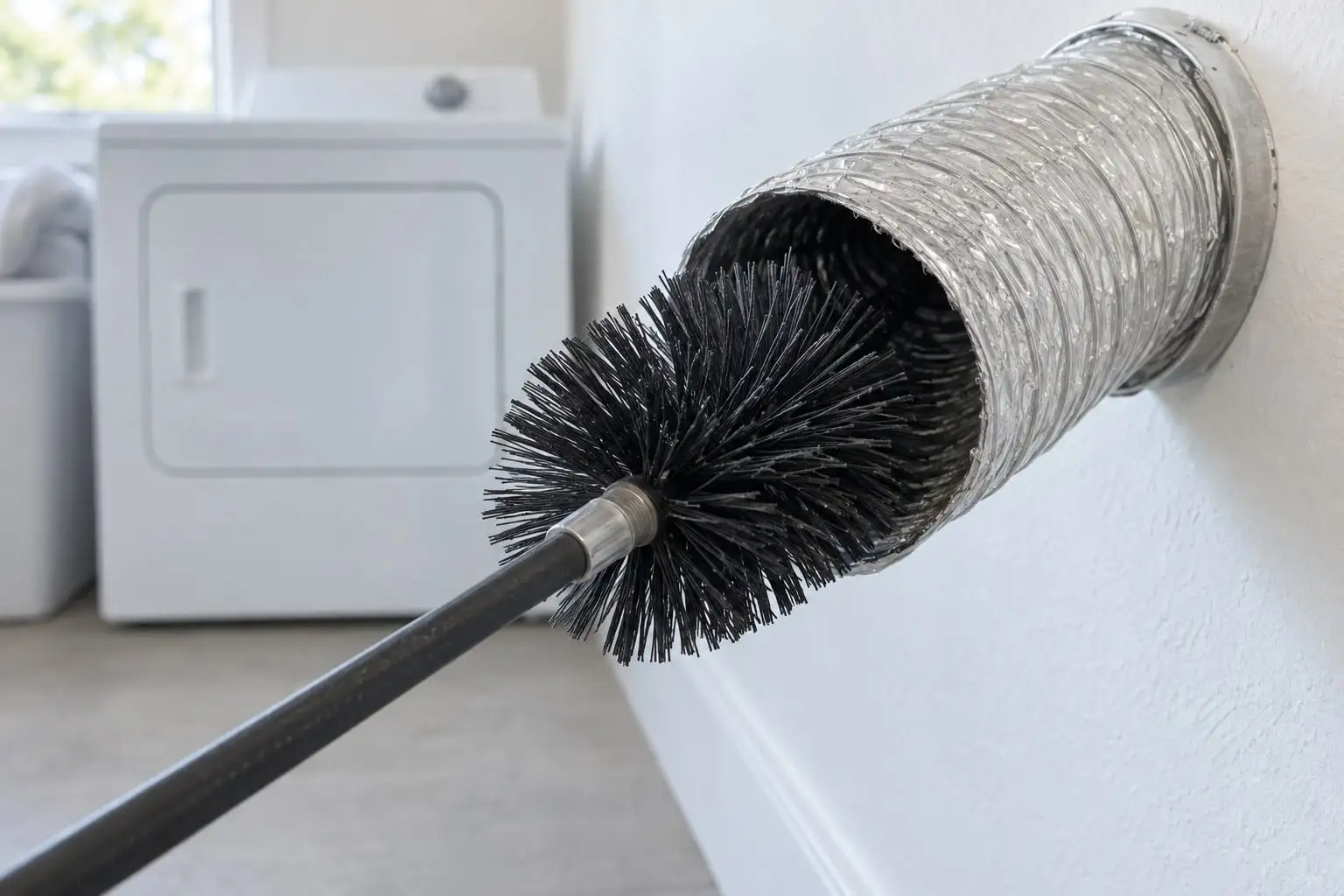
The visit
How a visit goes, from the call to the air at the hood.
Every vent is different, but the work follows the same line: the dryer, the duct and the hood.
You call or send a request
Call, or leave your number in the form at any hour. Say what you have noticed, and if the vent comes out of a wall or up through the roof.
A time is set
We call back to agree a time that suits you, and to ask what we should know about the dryer and the building.
The line is looked at
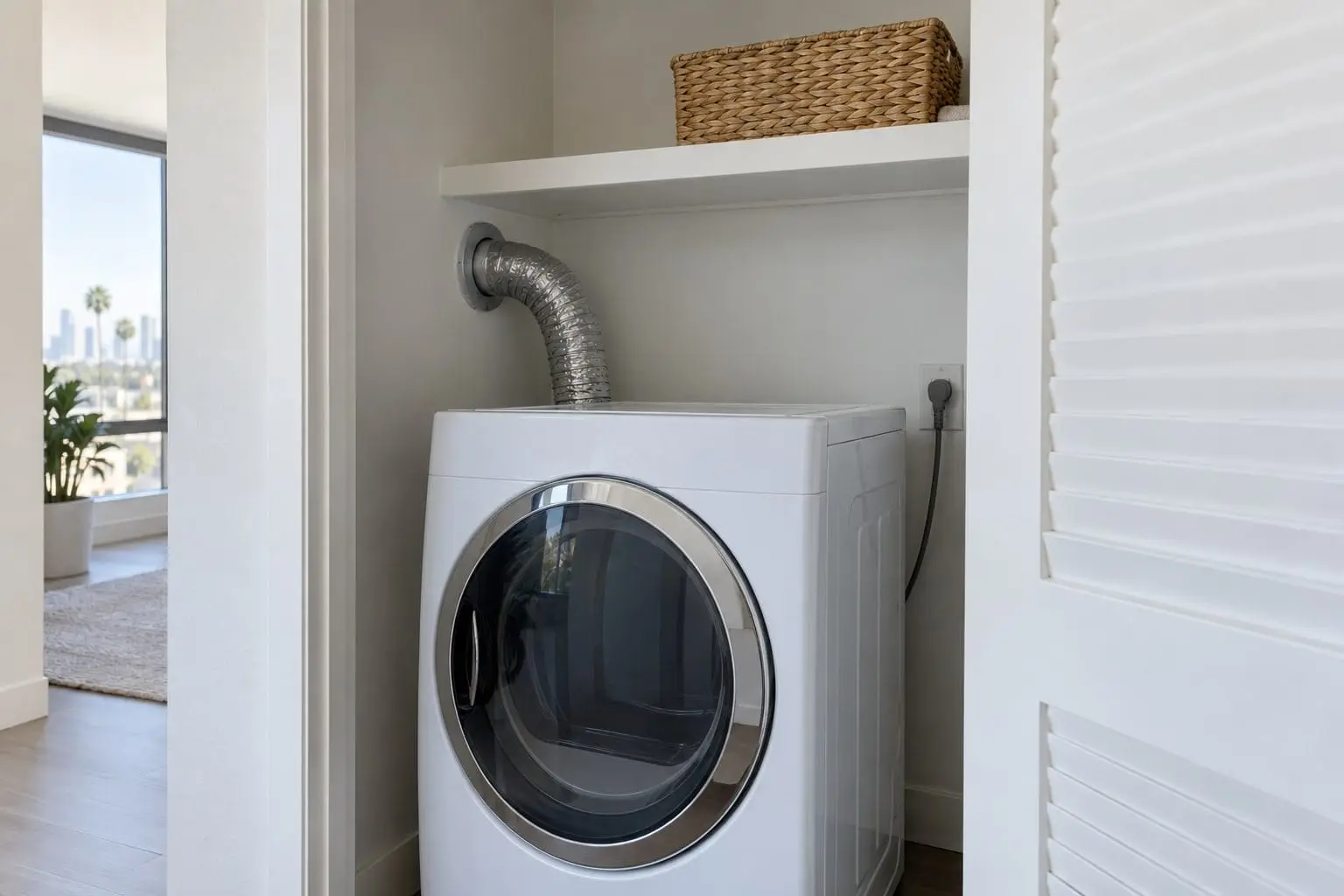
The visit starts at the dryer and follows the vent, from the connection at the back of the machine to the hood outside.
The vent is cleared
Lint and any blockage are brushed and vacuumed out along the run. The hood is cleared and its flap checked.
The air is checked
With the dryer running, the air at the hood shows whether the vent is open.
You hear what was found
If the duct is crushed, torn or badly routed, that is said plainly. Repair or a shorter route is a separate decision, and it is yours.
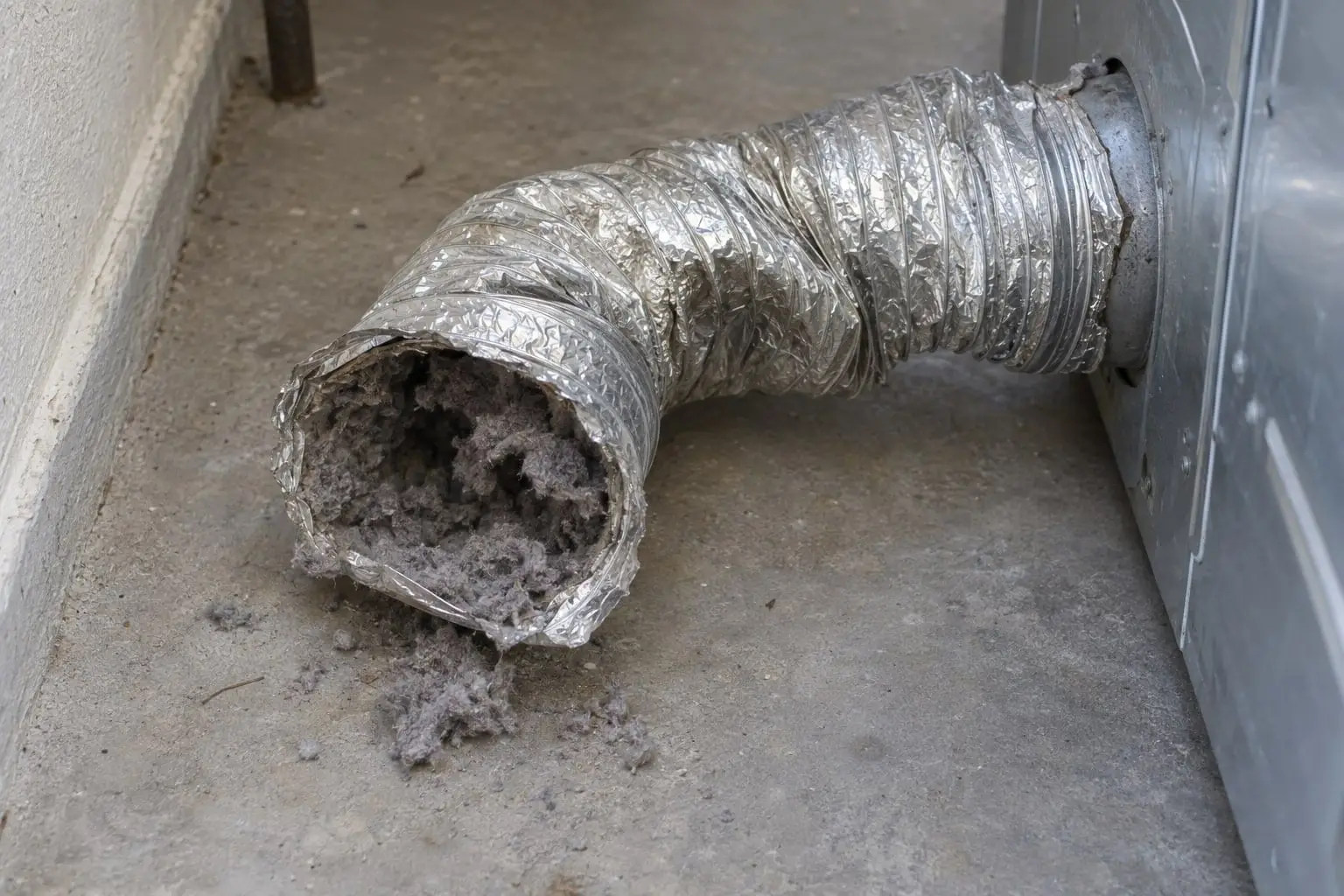
The signs
Six signs that the vent needs attention.
None of them proves a blockage on its own. Together, they are the usual reasons people call.
Clothes stay damp
A load that needs a second cycle often means the moist air is not getting out.
The dryer runs hot
The top of the machine, or the whole laundry room, feels hotter than it used to, because the heat has nowhere to go.
A burning or musty smell
Hot lint and trapped moisture both give off a smell. A burning one is a reason to stop the dryer and get the vent checked.
Little air at the hood
Stand outside while the dryer runs. A weak stream, or none, means something is in the way.
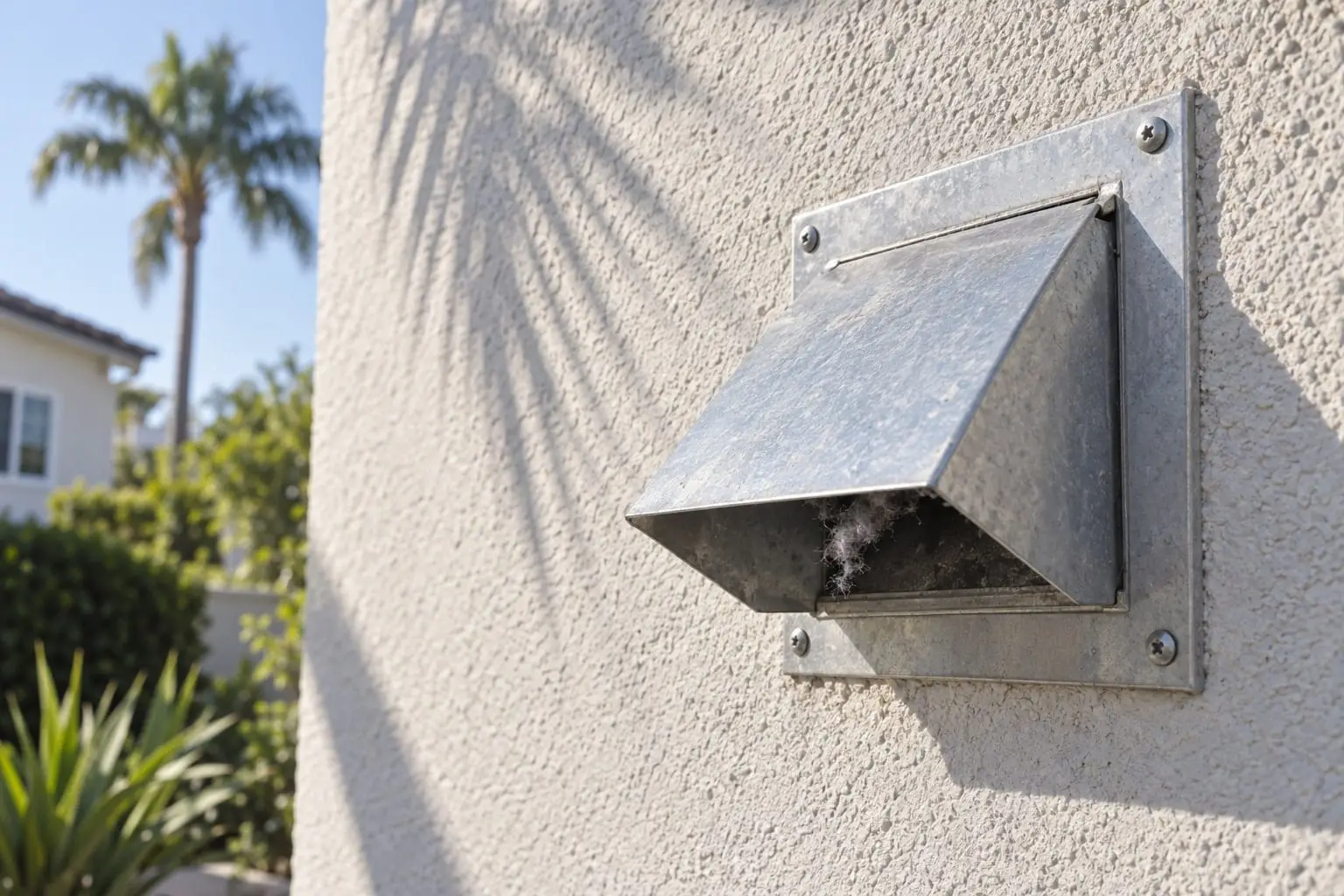
Lint around the hood
Lint on the wall, on the ground or caught in the flap shows that it is leaving the vent in the wrong places.
Nests and noises
Birds near the hood, or scratching in the wall, point to a nest or a pest in the vent.
What to do before the visit
A few minutes of preparation makes the visit shorter and gives the vent a fair look.
None of it is required, and anything you cannot do can be left to the visit.
- Clear the space in front of the dryer
- Empty the lint trap
- Note where the vent leaves the building
- Say whether the dryer is gas or electric
- Mention any birds or pests you have seen
Safety, before and after the visit
If you smell gas, leave the room, do not touch switches or flames, and call your gas company or 911 from outside. A blocked vent on a gas dryer can push exhaust gases into the room.
Do not run a dryer whose hood is blocked or whose duct has come loose, and do not push a rod up the pipe to clear it. If you see smoke or flames, leave and call 911.
Why the vent matters as much as the trap.
One figure from the fire service explains why a clean lint trap is not the whole job.
Fire departments across the United States respond to about 2,900 clothes dryer fires in residential buildings every year, and the biggest single cause, at 34 percent, is failure to clean.
Request a cleaning
Describe what you have noticed and leave your number. A call back sets the time.