


Dryer vent inspection and airflow test in Los Angeles
Some vents look fine from the laundry room and are blocked halfway along. An inspection looks inside the duct and checks how the air leaves, so you know what the vent needs before anything is cleaned or replaced.
- Look inside the duct
- Check the airflow
- Open 24 hours
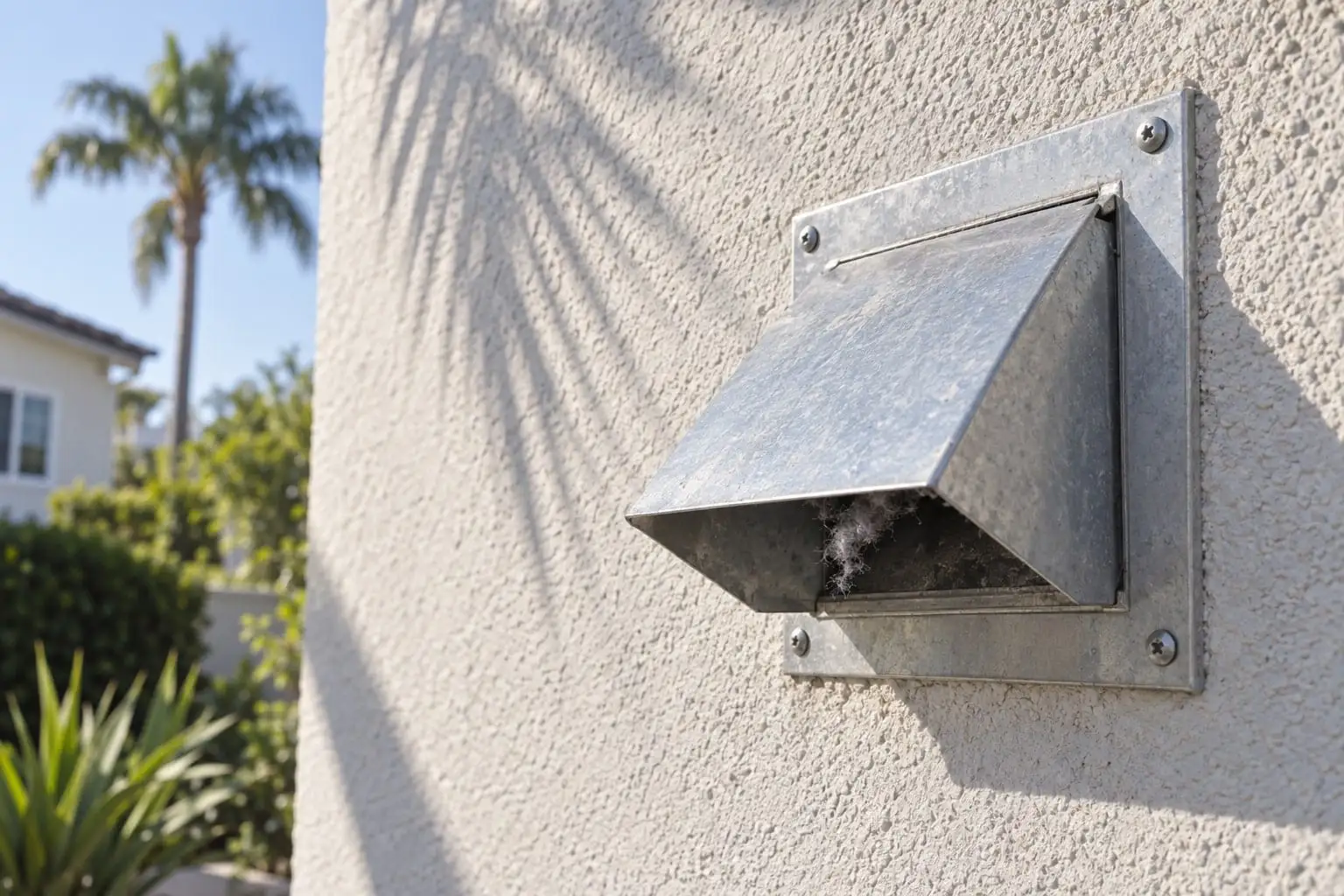
What an inspection looks at
A vent is only as good as its worst foot. The inspection follows the duct from the rear of the machine out to the exterior and looks at what the duct is made of, how long the run is, how many bends it takes, and whether any part is crushed, sagging, disconnected or held together with screws that stick into the airway.
Then it checks the thing that matters, which is air. With the dryer running, the air at the hood tells you whether the vent is open, partly blocked or choked. A vent can be spotless and still fail that check if it is too long or badly routed.
- A new dryer that still dries slowly
- A home you have just moved into, with no vent history
- A vent that was cleaned and a dryer that still runs hot
- A gas dryer, where you want the exhaust confirmed clear
- A building where you want to know which vents need work
What this service does for you
A real look inside
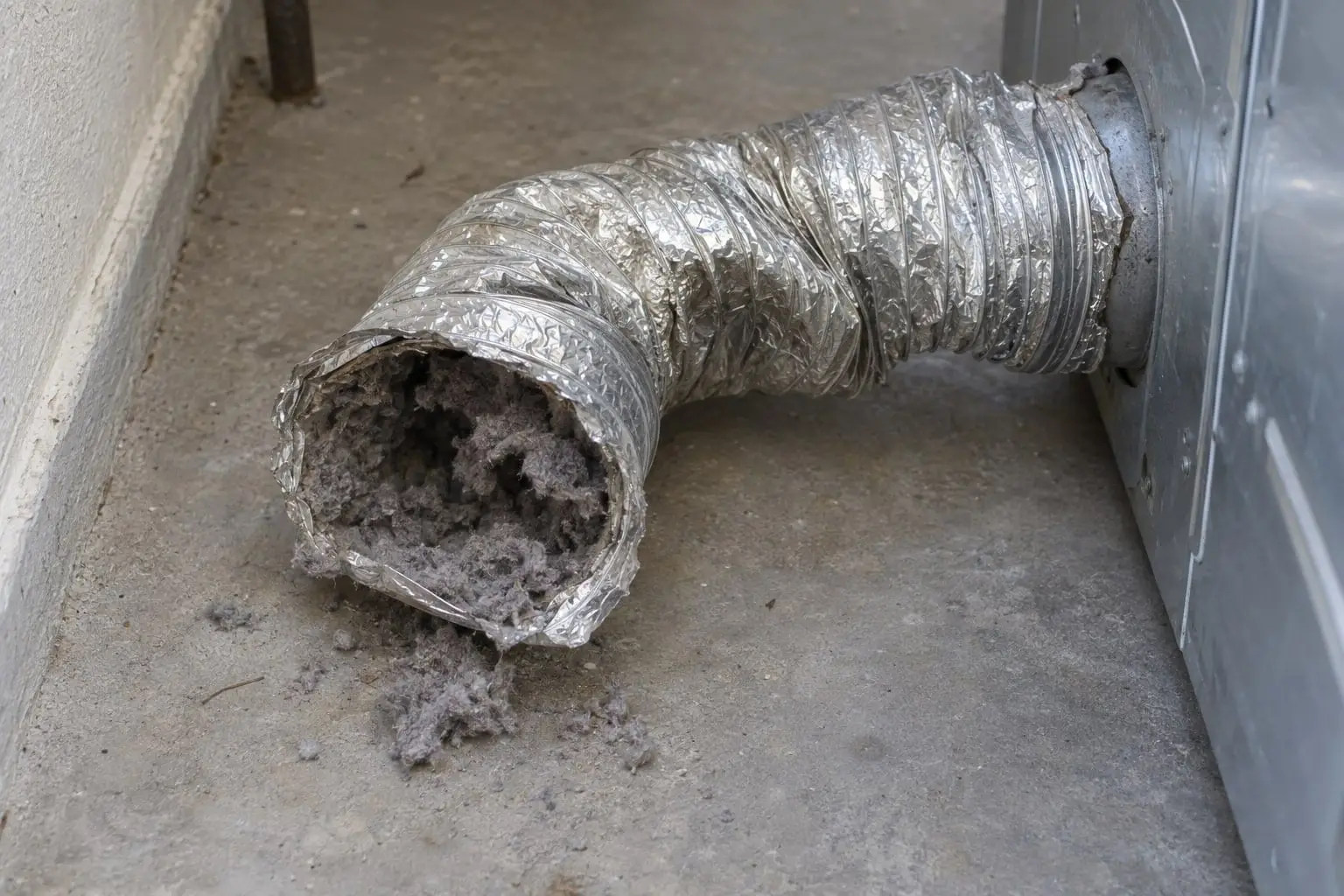
Looking inside the duct shows what a glance at the hood never can: lint packed at a bend, a crushed section, a loose joint.
Airflow, not guesses
Checking the air leaving the hood turns "it seems slow" into something you can compare before and after any work.
What it needs, in plain words
The finding comes in words you can act on: clean it, repair it, shorten the run or leave it alone.
Gas dryers
A blocked exhaust on a gas dryer can push combustion gases back into the room, so checking the exhaust there is more than a comfort.
What gets checked, from the dryer outward
The list is short because a vent is one line. What changes from home to home is how much of it can be seen, and how long it is.
- The connection at the back of the dryer and the first stretch of duct
- The duct material: smooth metal, or foil and plastic that hold lint
- Joints and seams, and whether screws stick into the airway
- Bends, and whether any is crushed or kinked
- The length of the run and where it leaves the building
- The hood or roof cap and its flap
How the airflow check works
With the dryer running, the air leaving the hood is felt and compared with what a healthy vent delivers. A healthy vent pushes a steady stream out through the flap. A weak or pulsing stream means something is in the way, and the weaker it is, the more it matters.
The same check after any work shows whether it did what it was meant to do.
Inspection first, or a cleaning straight away?
If the dryer already dries badly and the vent has never been cleaned, a cleaning is the likely answer and you can ask for that directly. An inspection earns its place when the cause is unclear, when the run is long or hard to reach, or when you want a finding before deciding on a repair.
Questions about this service
What is the difference between an inspection and a cleaning?
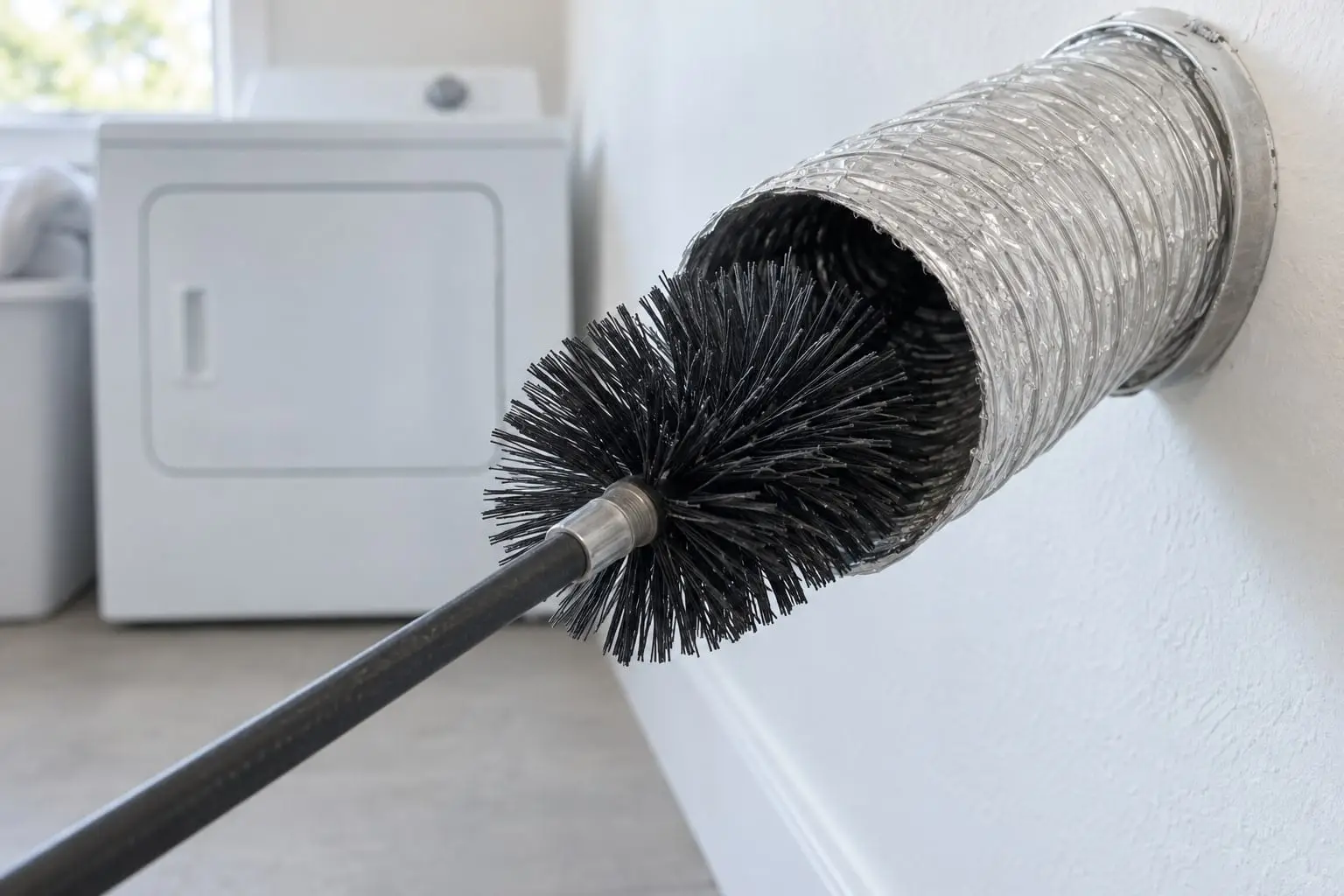
A cleaning removes lint and blockages from the vent. An inspection looks at the whole vent, checks the airflow and tells you what is wrong, which may or may not be lint. Often the two go together.
How can I test my dryer vent myself?
Run the dryer and go outside to the hood. A steady stream of warm air pushing the flap open is a good sign. Weak air, a flap that barely moves, or no air at all means the vent needs attention.
My dryer is new but still slow. Why?
A new dryer does not change the vent it is connected to. A long run, a crushed section, a plastic or foil duct or a blocked hood will hold back any machine, so the vent is the first place to look.
Does a dryer vent have a maximum length?
Yes. Dryer makers give a maximum length in the manual, and every bend shortens what is allowed. A run that is longer or bendier than the manual allows clogs faster and may need to be rerouted.
Do I need to be home for the inspection?
Someone needs to give access to the dryer and the laundry room, and the outside hood has to be reachable. If the vent leaves through a roof or a shared wall, mention it when you call so the visit can be planned.
Request a cleaning
Describe what you have noticed and leave your number. A call back sets the time.