


Dryer vent cleaning in Los Angeles
Lint does not stop at the trap. It rides the warm air into the duct and settles along the whole run, out to the hood on the wall. We clean the vent along its whole length, so the air has somewhere to go.
- Dryer to outside hood
- Whole vent line
- Open 24 hours
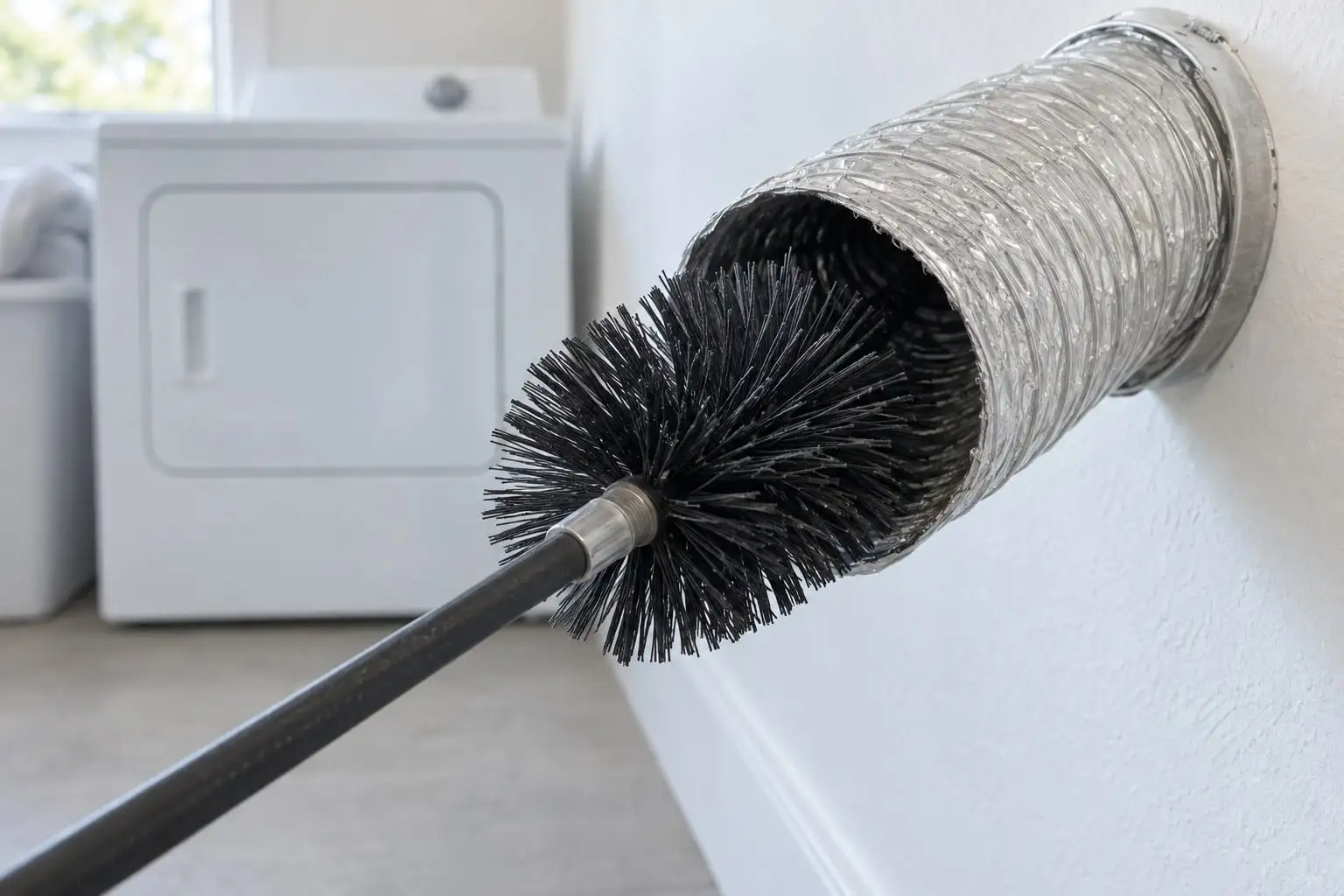
What actually builds up inside a dryer vent
The lint trap catches most of the fibre that comes off your clothes, but not all of it. The rest rides the warm, damp air into the duct and settles on the walls, on every seam and above all at every bend. A load at a time, the opening gets a little smaller.
Lint is fuel. A dryer already makes the heat, and a duct that cannot carry the air away leaves that heat sitting in the machine with the lint around it. That is why the vent itself, and not only the trap, is worth cleaning.
- Clothes still damp after a full cycle
- The dryer or the laundry room runs hot
- A burning or stale smell when the dryer is on
- Little or no air at the outside hood
- Lint on the wall around the hood
What this service does for you
Less to burn
Taking the lint out of the duct removes the fuel that a hot vent would otherwise carry.
Air moves again
With the line open, the dryer can push its moist air outside, so loads dry the way the machine was built to dry them.
The hood checked
The outside hood is cleared and its flap checked, so air can leave and the flap closes when the dryer stops.
Less strain on the dryer
A dryer that is not fighting its own duct can run under less strain, because the heat has a way out.
From the dryer to the hood
A cleaning follows the air. It starts at the machine, where the duct is disconnected so the back of the dryer and the first stretch of duct can be reached, then works along the run toward the outside wall or the roof. A rotating brush loosens what has packed against the walls, and a vacuum pulls it out behind the brush.
The last stop is the hood. Lint, and sometimes a nest, collects behind the flap, and a flap stuck open or shut ends the job as surely as a clogged duct does. The hood is cleared, the flap is checked, and the vent is put back together so the dryer can run again.
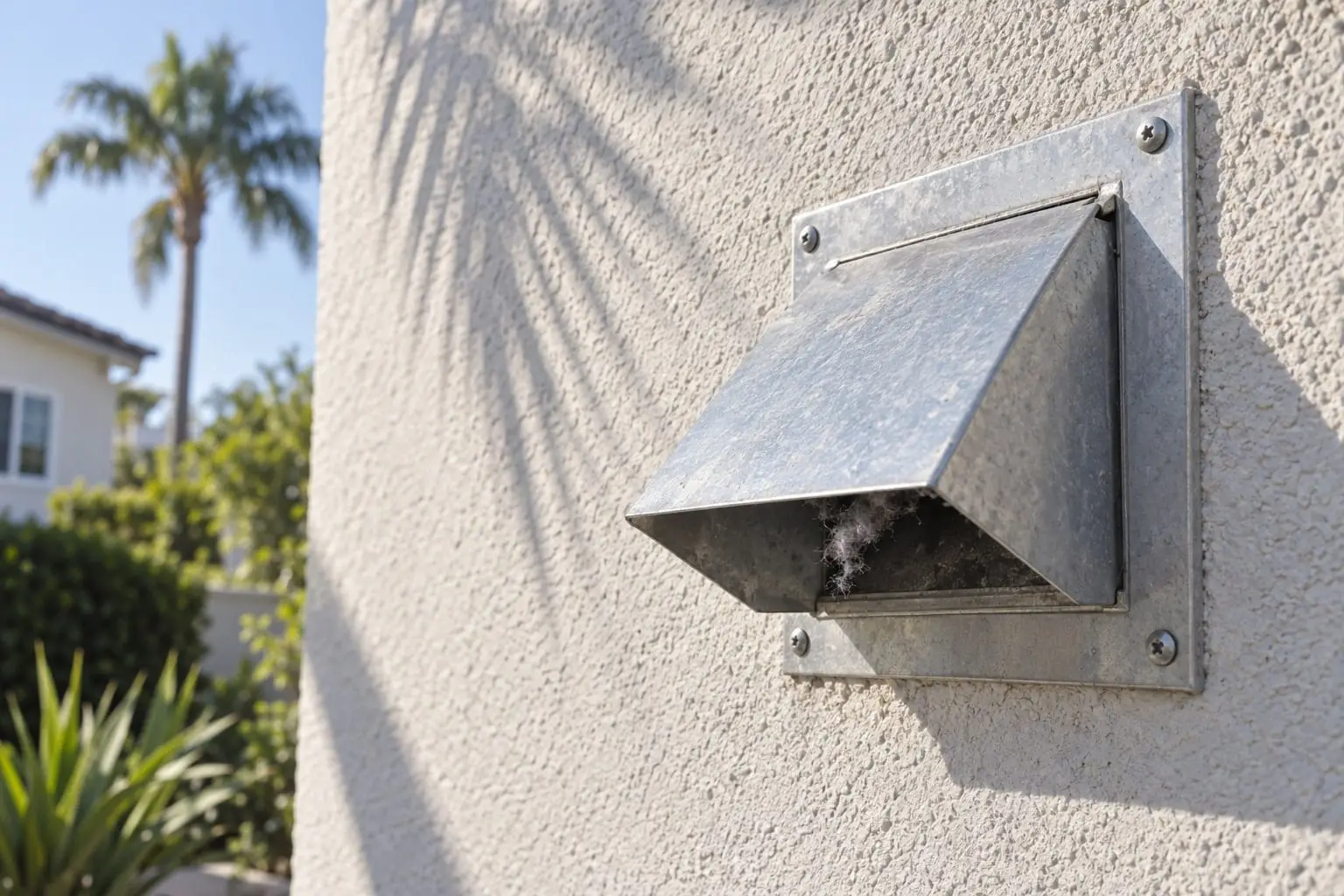
Why the run matters more than the trap
Every foot of duct and every bend gives lint a place to settle. A short, straight run to the nearest wall is forgiving. A long run, a run that climbs, or one with several bends gives the air a lot to push against, and lint collects faster.
Flexible foil or plastic duct is the other usual suspect. Its ridges hold lint, and it crushes easily behind a dryer pushed against the wall. If the run is of that kind, a cleaning is a good moment to ask whether it should be replaced, which is a repair of its own.
After the cleaning
The air at the hood is the test. A dryer that is running should push a steady stream out through the flap. If the duct is crushed, torn or badly routed, a cleaning cannot fix that, and the next step is a repair or a shorter route.
Questions about this service
How do I know my dryer vent needs cleaning?
Damp clothes after a full cycle, a hot dryer or laundry room, a burning or stale smell, and a weak stream at the outside hood are the usual signs. If the vent has never been cleaned, that is a reason by itself.
Does emptying the lint trap do the job?
Not on its own. The trap stops only part of the lint; the rest settles in the duct and behind the hood flap. Emptying it after each load is worth doing, though it cannot stand in for cleaning the vent.
Does the cleaning include the outside hood?
A proper cleaning ends there. The hood is where lint and nests gather, and a flap that does not open freely keeps the air from leaving, so it is cleared and checked as part of the job.
Can I ask for a cleaning at night or on a weekend?
The office is open 24 hours, every day, and the online form accepts a request at any hour. Phone (410) 227-8391 or leave your number, and a call back sets the time.
Do you clean vents in apartments and condos?
Yes. Houses, apartments, condos and shared laundry rooms all have dryer vents. Where several units share one building, the vents are often long or leave through the roof, which is worth mentioning when you call.

Request a cleaning
Describe what you have noticed and leave your number. A call back sets the time.