


Dryer vent repair and rerouting in Los Angeles
Cleaning cannot fix a duct that is crushed, torn or built the wrong way. When the vent itself is the problem, we repair it, or run it a shorter and straighter way so the air leaves freely.
- Crushed or kinked duct
- Shorter, straighter runs
- Open 24 hours
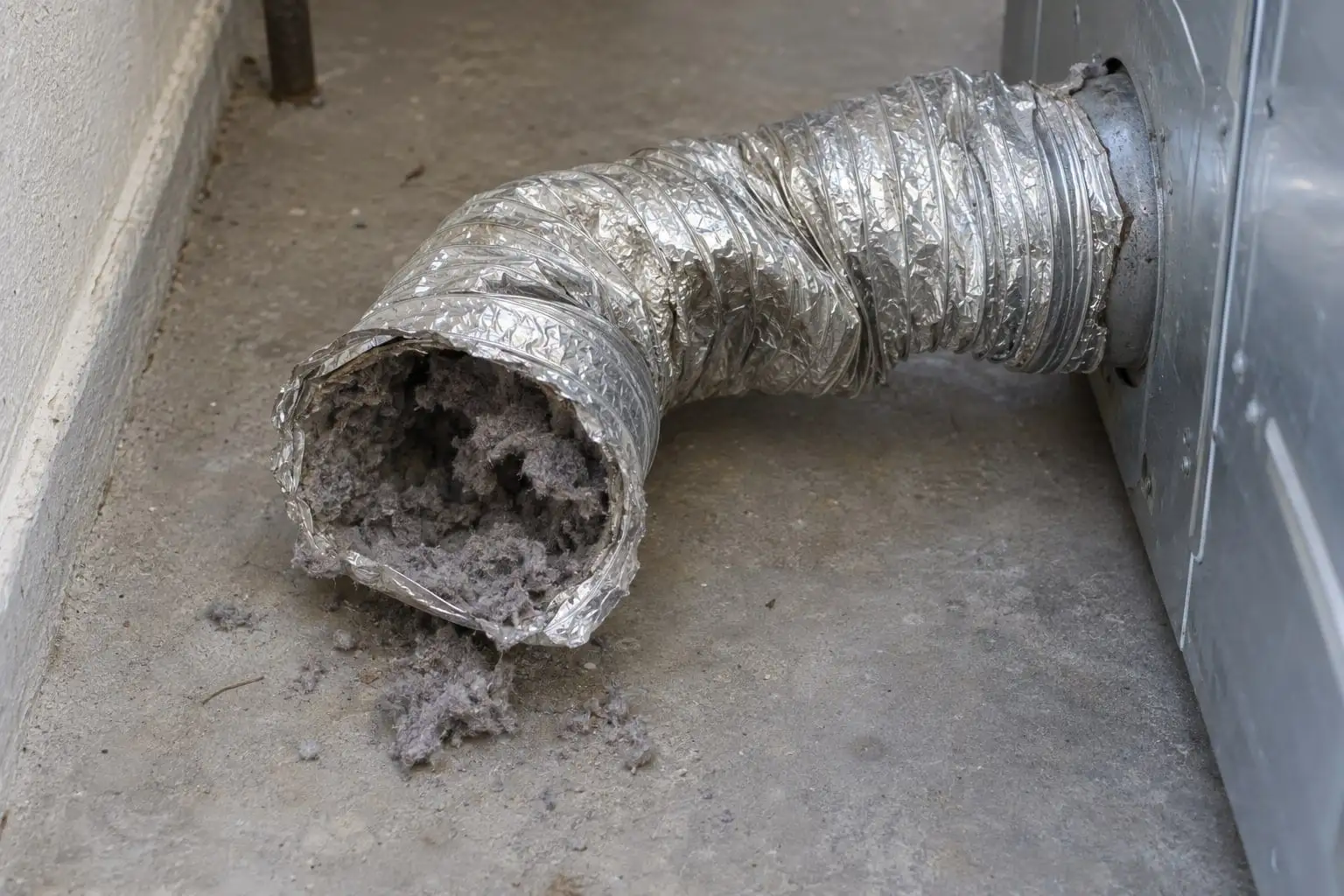
When a vent needs repair and not another cleaning
A dryer pushed hard against the wall can crush the duct behind it. A joint can pull apart. Foil or plastic duct can tear, sag or hold lint in its ridges. None of that is a cleaning problem, and cleaning a damaged vent only buys a little time.
Some vents were simply built the wrong way: far too long, with too many bends, or ending where the air cannot easily leave. For those, the fix is to move the run, not to clean it more often.
- A duct flattened or bent behind the dryer
- Lint or moisture around the joints of the duct
- A dryer that stays slow right after a cleaning
- A vent that runs a long way or turns many times
- A hood that is broken, loose or missing its flap
What this service does for you
Duct that can carry air
A crushed or torn section is replaced with duct the air can pass through without catching.
Smooth metal where it counts
Building codes generally call for smooth metal duct for dryer exhaust, because plastic and foil hold lint and burn more readily than metal.
A shorter way out
A run with fewer feet and fewer bends clogs more slowly and is easier to keep clean afterwards.
Joints that hold
Done properly, joints are fastened and sealed with foil tape or clamps, never with screws that poke into the airway or cloth tape that dries and lets go.
What gets repaired
A repair starts from what the inspection finds, and it should be no bigger than the fault.
- Crushed, kinked or torn duct, replaced
- Loose or disconnected joints, fastened and sealed
- Foil or plastic duct, replaced with metal
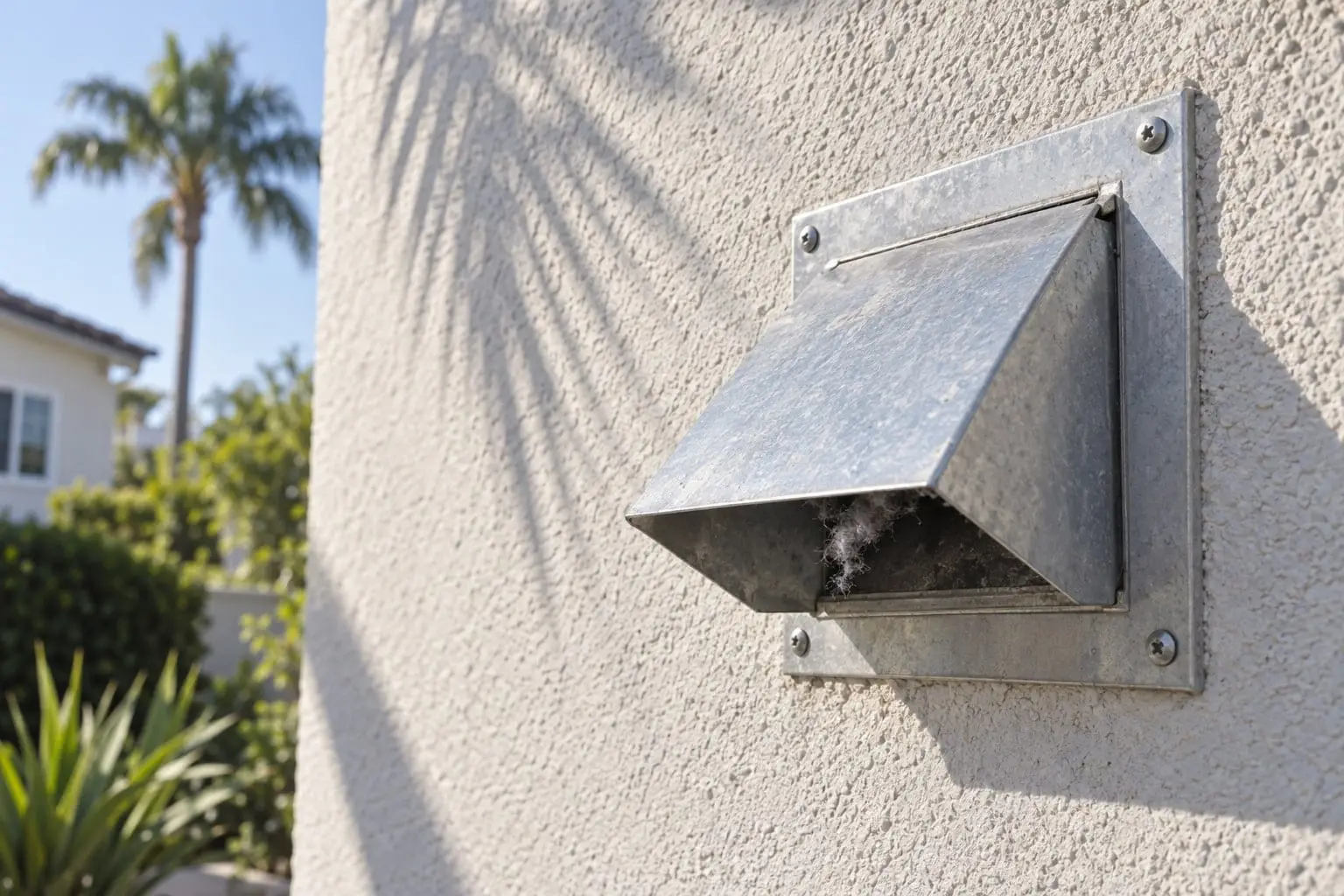
- Broken hoods and caps, or hoods without a working flap
- Sagging runs, supported so lint does not pool
Rerouting: a shorter, straighter way out
Rerouting means choosing a different path for the duct: out of the nearest outside wall instead of across the building, or up through the roof instead of around three corners. Every foot and every bend taken out of the run is one less place for lint to settle.
Which way is best depends on the building. A closet dryer, a unit in the middle of an apartment building and a laundry room with an outside wall behind it all have different options, and the dryer maker's maximum length sets the limit.
Where the dryer meets the wall
The most common damage happens right behind the machine. When space is tight, a slim elbow fitting or a recessed box in the wall can let the dryer sit closer without squashing the duct. It is a small part with a big effect.
Questions about this service
Can a crushed dryer duct be fixed without replacing the whole vent?
Often, yes. A crushed or torn section can be replaced and the joints resealed, and the rest of the run left alone if it is sound. An inspection shows how much of the vent is in good condition.
Is foil or plastic dryer duct safe?
Plastic and vinyl duct are not suitable for a dryer, and foil duct is meant only for a short final connection behind the machine. Both hold lint in their ridges and can burn. Smooth metal duct is the standard choice.
Why is my dryer vent so long?
Many buildings put the laundry in the middle of the floor plan, far from an outside wall, so the vent has to travel. A long run holds lint more easily and is harder to clean, which is why a shorter route is often worth considering.
Can the dryer vent go through the roof?
Yes, many do, especially in apartment buildings. A roof vent needs a proper cap and care to keep rain out, and it collects nests easily, so it is worth checking on a regular schedule.
Do I have to repair the vent after an inspection?
No. An inspection tells you what it found, and what to do about it is your decision. A vent that is only dirty needs cleaning, not repair, and a vent that is damaged will keep clogging until it is fixed.
Request a cleaning
Describe what you have noticed and leave your number. A call back sets the time.